Tuesday, December 30, 2008
Byzantine Art
Wednesday, November 19, 2008
Asian Art
Japanese art
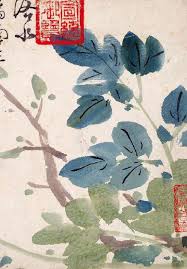
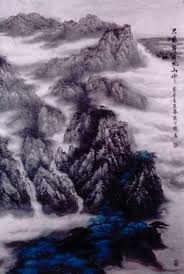
On the continent Asia, China and Japan have produced two different types of art that have distinct inspirations behind the creation. Japanese art, for instance, was largely inspired by the introduction to Buddhism from 552 to 897. Chinese art was also inspired by various religions: Confucianism, Taoism, and Buddhism, and also by nature. The art forms differ too. The Japanese primarily stuck to drawing, box-making, decorative writing, scrolls, and sculptures. The Chinese focused on painting, folk arts, silk, calligraphy, pottery, sculpture, metal arts and papercuts.
Japanese artist, Katsushika Hokussai, created the image shown above. It is called "The Great Wave off Kanagawa" and was first in the series of 36 from "Views of Mount Fuji". Hokusai used the woodblock process of printing to make this image, which was a popular form of art it both Chinese and Japanese art.
Chinese art
I got my information from http://www.kyrene.org/schools/brisas/sunda/arthistory/arthistory.htm and http://en.wikipedia.org/wiki/Hokusai
Japanese artist, Katsushika Hokussai, created the image shown above. It is called "The Great Wave off Kanagawa" and was first in the series of 36 from "Views of Mount Fuji". Hokusai used the woodblock process of printing to make this image, which was a popular form of art it both Chinese and Japanese art.
I got my information from http://www.kyrene.org/schools/brisas/sunda/arthistory/arthistory.htm and http://en.wikipedia.org/wiki/Hokusai
Wednesday, November 12, 2008
Greek and Roman Art
The Greeks created much of their art to honor their many gods and goddesses. The Acropolis, for example, was constructed to give thanks to Athena, the Greek goddess of wisdom. The Parthenon, which is part of the Acropolis, (pictured above) is located in Athens, Greece-the city that Athena is a patron saint of. A fundamental part of Greek architecture is the three types of columns- Doric, Ionic, and Corinthian. Doric columns were used in the creation of the Parthenon. Out of all the column styles, this is the most simple and classic. I admire this particular style for it’s timeless elegance and long-lasting beauty. The Parthenon is an astounding work of Greek art that we can look to for inspiration for years to come.
The Romans borrowed much of their style of creating art from the Greeks. Sculpture, landscape, portrait painting, and even genre painting are all types of art that were produced during this time period.
Tuesday, October 28, 2008
African Art
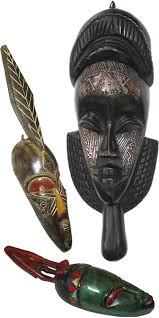
I think the African culture is quite intriguing. The art they produced in the past holds much significance and symbolism. It seems like the majority of their art served a specific purpose or made a statement of some sort. For instance, some art such as masks and costumes were worn for customary ceramonies to worship gods. Other sculptures were created with meaning. I remember looking at one figure of a man with a large head, unproportional to the rest of his body. It looked like this to point out that the head was the locus of wisdom and intelligence. The picture shown is of a Linguist's Staff. I liked the gold color that suggests authority and prestige. Overall, I think the way the Africans went about creating their art is very interesting. And even more, I like the thought process that went along with it.
Saturday, September 27, 2008
Ancient Egyptian Art
Friday, September 19, 2008
Prehistoric Art
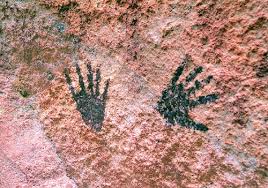
I never realized how substantial a simple cave drawing could be. It’s hard to grasp the concept that this was the first art created in pre-historical times. The artists behind the work are, in fact, the cavemen and they, as with anyone else, have their own personal style. The picture below is a print of a caveartist's hands. This was their way of signing their work. The majority of their drawings consist of their representations of animals. These animals vary in species, but all have one distinguishing quality- they are only drawn from side view. I found this particularly interesting, as well as the fact that a background is nonexistent in their art. The people and animals are floating on the cave walls, perhaps to suggest and symbolize that they led a nomadic lifestyle. Even though we do not know all the intentions behind the cavemen’s creations, we do realize that art has been around for a very long time.
Picture from http://www.students.sbc.edu/ogborn03/PrehistoricArt_files/image014.jpg
Tuesday, September 9, 2008
Rain
Needed rain summons the feeling of joy as it falls. Finally the sky opens up and the rain slants downward. The fresh smell of the rain hitting the earth permeates the air. The class stares out the window as if nature was putting on a show. The water dances as it bounces off the school rooftop and the lightning acts as a natural spotlight. This is a traveling art gallery coming to villages, towns, and cities near you.
Monday, September 8, 2008
Digital Media
I guess digital media has to do with the art of using new technologies as an art form, such as online virtual worlds. I found this article online (http://www.dmwmedia.com/news/2008/09/08/analysis%3A-virtual-worlds-expo-and-live%21-sunset) that talked about creating digital worlds like Disney Online as “a new medium and a big emerging industry”. It was especially interesting when the author mentioned that virtual worlds still need a real world to thrive and that in the future it may be the other way around. I also found this site that has a whole list of interactive websites. Just go to http://www.intrigue.ie/ to check it out.
Also, here's a really cool digital media art photo I just found using high-speed bullet photography.
Subscribe to:
Comments (Atom)