 On the continent Asia, China and Japan have produced two different types of art that have distinct inspirations behind the creation. Japanese art, for instance, was largely inspired by the introduction to Buddhism from 552 to 897. Chinese art was also inspired by various religions: Confucianism, Taoism, and Buddhism, and also by nature. The art forms differ too. The Japanese primarily stuck to drawing, box-making, decorative writing, scrolls, and sculptures. The Chinese focused on painting, folk arts, silk, calligraphy, pottery, sculpture, metal arts and papercuts.
Japanese artist, Katsushika Hokussai, created the image shown above. It is called "The Great Wave off Kanagawa" and was first in the series of 36 from "Views of Mount Fuji". Hokusai used the woodblock process of printing to make this image, which was a popular form of art it both Chinese and Japanese art.

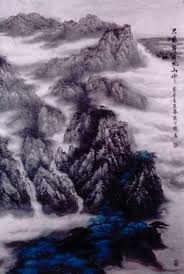 Chinese art
I got my information from http://www.kyrene.org/schools/brisas/sunda/arthistory/arthistory.htm and http://en.wikipedia.org/wiki/Hokusai


